
Have you ever wanted to add fruity flavor to your recipes without using fresh strawberries? I have and that’s why I love making Powdered Strawberries. It’s easy to make, very useful and gives a strong strawberry flavor to anything you cook or bake. Plus, it helps you keep the taste of strawberries all year long.
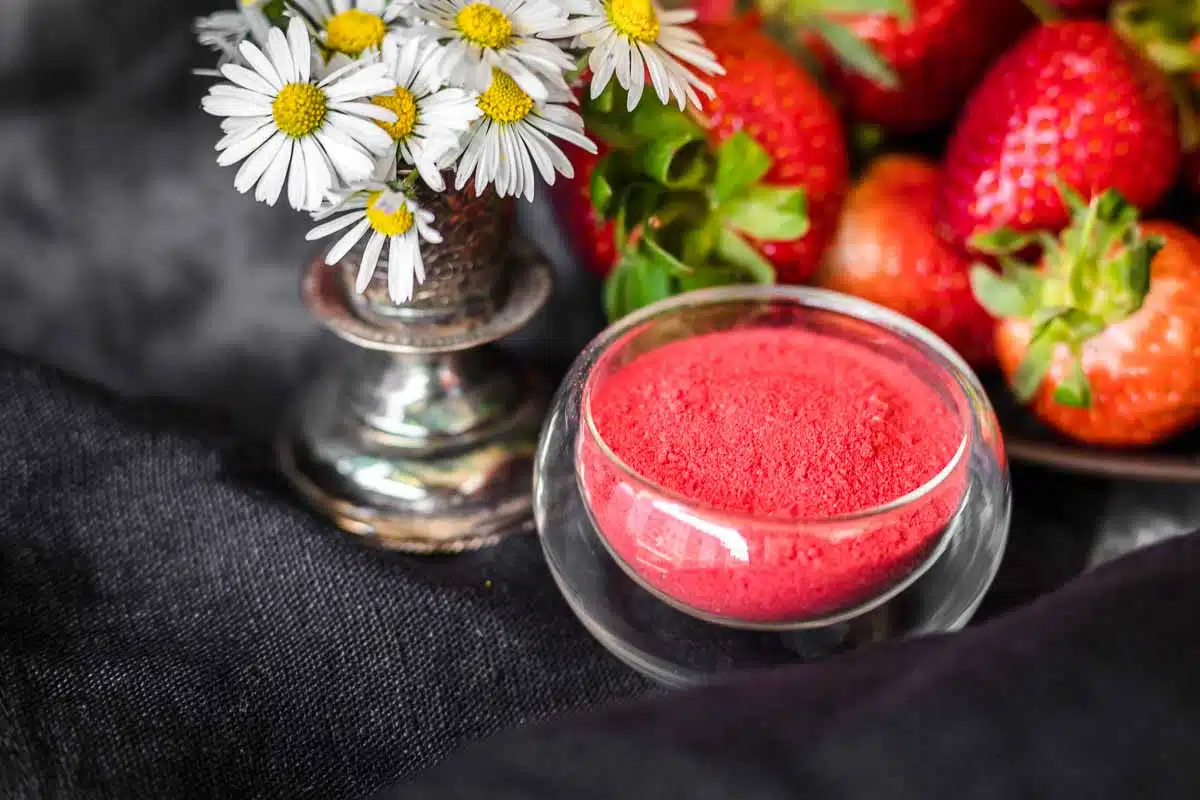
When I first made powdered strawberries, I was amazed at how easy it was and how much flavor it had. The process was quick, and the result was a bright, dehydrated food turned into a powder that made my recipes better. It soon became one of my favorite ways to add a sweet strawberry flavor to my dishes.

Uses for Strawberry Powder
Powdered strawberry is a great thing to have around. You can use it in many ways. It’s perfect for adding fruity flavor to smoothies, yogurt, and baked goods like muffins and cakes. You can also mix it into oatmeal or sprinkle it on cereal for a sweet breakfast.
You can also use powdered strawberry to make flavored sugar or add a bit to your favorite drinks for extra flavor, just like how I use hibiscus powder. There are so many ways to use it, and it’s a great way to enjoy strawberry taste all year long.

Kitchen Gadgets for Making Strawberry Powder
To make powdered strawberries, you don’t need a lot of fancy equipment. Here are a few kitchen gadgets that can help. A food dehydrator is perfect for making dried strawberries. A food processor, if you have one, can also work well for making the powder. These gadgets make the process quick and easy, so you can enjoy homemade strawberry powder without any hassle.
Dry Strawberries or Frozen Strawberries
You can use either dried or frozen strawberries to make powdered strawberries. Dried strawberries are often easier to powder because they’re already dry and brittle. If you’re using frozen strawberries, you’ll need to dry them first, either by air-drying or using a dehydrator.
Dried strawberries will give you a finer, more concentrated powder, while frozen strawberries might need a bit more work. Either way, you’ll end up with a delicious result, and use strawberry powder in your food recipes.

Easy Instructions for Creating Dehydrated Strawberries into Strawberry Powder
Must-Have Tools for Your Kitchen
- Magic Bullet or Coffee Grinder: turning dried strawberries into a fine powder.
Key Ingredients:
- Dehydrated Strawberries: The base of the powder. Can be bought or made at home.
- Sweetener (optional): powdered sugar can be added for extra sweetness.
*Exact measurements are listed in the recipe card below.
Detailed Directions for Making Dehydrated Strawberry Powder
Making powdered strawberries is a simple process. You’ll need a few basic tools and ingredients, and you’ll be able to learn how to make your own strawberry powder recipe in no time. This is a good dessert that is fully low carb.
One: Prepare Ingredient
Start with dehydrated strawberries. If you’re using frozen strawberries, make sure they’re fully dehydrated before you start.

Two: Powder the Dried Strawberries
Place the dried strawberries into the Magic Bullet, blender or food processor. Blend or process them until they turn into a fine powder. It might take a few minutes to get the right texture.

Three: Store the Powdered Strawberry
Place your fruit powder immediately into the air-tight container. Store it in a cool, dry place to keep it fresh. You can use it in your recipes as needed.

Pro Tips for Best Results
- Make sure your strawberries are completely dried before powdering them. Any moisture can affect the texture of the powder.
- Blend in small batches to get a finer, more even powder.
- Store the powder in a dark, cool place to maintain its flavor and color.
Common Questions Answered
What Are the Perfect Pairings for Homemade Strawberry Powder?
Homemade strawberry powder pairs wonderfully with yogurt, smoothies, baked goods, and even savory dishes. It adds a sweet, fruity flavor that can brighten up many recipes.
What Are the Proper Storage Tips for Powdered Strawberries?
Store powdered strawberries in an airtight container in a cool, dry place. This will keep them fresh and prevent them from clumping. For longer storage, you can keep them in the refrigerator or your pantry.

While freezing powdered strawberries isn’t usually necessary, you can store them in a freezer-safe container if you want to keep them for a longer time. Just make sure the container is airtight to prevent moisture from getting in.
Additional Easy Small-Portion Recipes You’ll Love
If you enjoyed making powdered strawberries, please check our Dehydrated Strawberries or Powdered Onion recipe. There are also more small-batch recipes on my blog like Lavender Tea Recipe and Lavender Cocktail Syrup, perfect for cooking for one or two, so you can enjoy homemade food without any waste.
Pin This Recipe for Later

Need Support or have Questions? Join our Free Facebook Group.
Follow us on Pinterest, Facebook, Instagram, TikTok, Flipboard, or YouTube.
For weekly New Recipes and a FREE E-Book get into our NEWSLETTER.
Printable Recipe Card
We Appreciate Your 5-Star Rating

Powdered Strawberry Recipe
Equipment
Ingredients
- 1/2 Cup Dehydrated Strawberries
- 1/2 Tablespoon Sugar Optional
Instructions
- Start with dehydrated strawberries. If you’re using frozen strawberries, make sure they’re fully dehydrated before you start.
- Place the dried strawberries into the Magic Bullet, blender or food processor. Blend or process them until they turn into a fine powder. It might take a few minutes to get the right texture.
- Place your fruit powder immediately into the air-tight container. Store it in a cool, dry place to keep it fresh. You can use it in your recipes as needed.
Notes
- Make sure your strawberries are completely dried before powdering them. Any moisture can affect the texture of the powder.
- Blend in small batches to get a finer, more even powder.
- Store the powder in a dark, cool place to maintain its flavor and color.
Nutrition
Disclaimer
Please note that nutrient values are estimates only. Variations can occur due to product availability and manner of food preparation. Nutrition may vary based on methods of origin, preparation, freshness of ingredients, and other factors.
